

Agentic AI, Alternative Data and SIFs Take Centre Stage at Indian Institutional Quant Conference 2026
 Enterprise Tech Wire
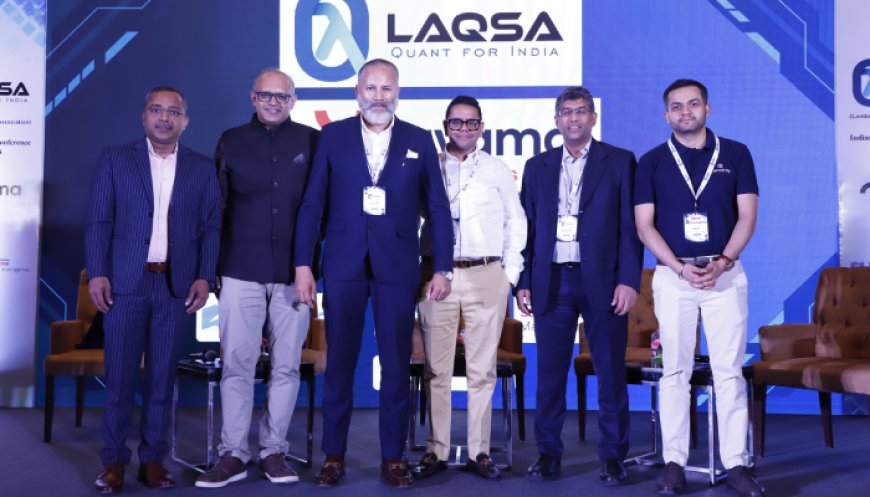
New Delhi, India: The sixth edition of the Indian Institutional Quant Conference (IIQC) 2026, organized by the Lambda Quantitative Strategies Association (LAQSA), brought together leading voices from finance, technology, academia and policy to explore how emerging technologies are transforming India's quantitative investment landscape. Held on July 17 at Taj City Centre, Gurugram, the conference highlighted the growing role of Agentic AI, alternative data, and Specialized Investment Funds (SIFs) in shaping the future of institutional investing.
The event attracted participation from asset managers, financial institutions, researchers, regulators and technology experts, reinforcing India's growing position in the global quantitative finance ecosystem. Sponsors included Nuvama Asset Services (Title Sponsor), BSE, Nubra, LSEG, S&P Global Market Intelligence, and CFA Society India.
Opening the conference, LAQSA co-founders Rishi Kohli, Pankaj Mani, and Arvind Mathur emphasized the need for stronger collaboration between technology, financial markets and regulatory frameworks as quantitative investing continues to mature in India.
A major highlight of the conference was the discussion around Agentic AI, where experts explored how autonomous AI agents and multi-agent systems are beginning to reshape portfolio management, investment research and systematic trading. During his session, Prof. Miquel Noguer I Alonso from NYU Courant, NYU Tandon School of Engineering and Columbia University demonstrated how AI-driven autonomous decision-making could significantly improve investment efficiency while introducing new governance and risk management challenges for financial institutions.
The conference also examined the growing importance of Artificial Intelligence, Machine Learning and Alternative Data in investment decision-making. Industry leaders from LSEG and S&P Global Market Intelligence discussed how India's data ecosystem differs from global markets, highlighting both the opportunities and regulatory considerations associated with AI adoption in financial services.
Another key discussion focused on the rapid emergence of Specialized Investment Funds (SIFs) as institutional investors and family offices increasingly seek systematic investment strategies. Industry leaders examined how SIFs are evolving from niche investment vehicles into an important component of India's wealth management and institutional investment landscape.
The conference also featured discussions on quantitative risk management, foreign exchange strategies, and the evolving regulatory environment for algorithmic and systematic investing. Prof. Chetan Ghate, Member of the Prime Minister's Economic Advisory Council, shared insights into India's macroeconomic outlook and the policy challenges that will shape long-term economic growth, while other experts explored global best practices for regulating quantitative investment ecosystems.
Reflecting on the event, Pankaj Mani, Co-Founder of LAQSA, said the conference demonstrated how India's quantitative investment community is rapidly moving beyond theory toward practical implementation. He noted that discussions around Agentic AI, quantitative regulation and systematic trading reflected the industry's increasing technical maturity.
Closing the event, Rishi Kohli, Co-Founder of LAQSA, highlighted the significance of hosting the conference in the National Capital Region once again, noting that the event successfully connected global expertise with India's evolving institutional investment ecosystem while strengthening collaboration among professionals driving systematic investing.
As financial markets become increasingly data-driven, technologies such as Agentic AI, advanced analytics and alternative data are expected to play a much larger role in investment management. The sixth edition of IIQC underscored that quantitative investing is no longer a specialized discipline but an essential capability for institutions seeking to improve decision-making, manage risk and generate long-term investment performance.
By bringing together experts from finance, technology and academia, the conference reinforced the importance of innovation, collaboration and responsible AI adoption as India's institutional investment ecosystem continues to evolve.