

Barracuda Sees 2026 as the Turning Point for Autonomous Attacks and Human-Enabled Cyber Readiness
 Enterprise Tech Wire

As 2025 comes to a close, Barracuda’s cybersecurity experts are forecasting a pivotal year ahead — one where AI-powered attacks scale faster than ever, while human judgement and governance remain critical to defense. Their outlook provides important guidance for Indian enterprises preparing for a fast-changing threat environment.
Key Trends Shaping Cybersecurity in 2026
Hyper-personalised phishing takes over
Cybercriminals will leverage generative AI to create deeply contextual and convincing phishing lures — capable of bypassing both role-based and behavioural defenses. Traditional email security will face its toughest challenge yet.
Ransomware becomes multi-stage and relentless
Attackers will increasingly pair targeted ransomware with multiple layers of extortion, returning to compromised environments repeatedly to exploit stolen data and system vulnerabilities.
AI-driven SOCs accelerate response — but humans stay essential
“Co-pilot” AI models and automated playbooks will dramatically shorten detection and investigation time. But machine-only decisions won’t suffice:
- New AI governance structures will be required
- Human expertise will drive judgement, escalation, and accountability
Automation grows, but people remain the first and last line of defence.
Quantum security moves into the boardroom
Sectors like BFSI, healthcare, and defence will begin:
- Quantum-resilient architecture adoption
- Crypto/quantum awareness programs
- Secure software engineering for the post-quantum era
Quantum readiness will become a core compliance metric.
Talent will shift toward niche and domain-driven expertise
Generic coding and test profiles will give way to:
- Offensive/defensive AI security specialists
- Quantum-resilient cryptography engineers
- Skilled blue-team analysts for complex, AI-driven threats
Upskilling and reskilling the current workforce becomes a strategic differentiator.
Supply chain attacks intensify
Organisations will demand deeper visibility into vendor practices, with stronger downstream accountability and risk scoring.
Security culture must become personalised
Awareness programs must mirror attacker sophistication — adaptive, contextual, and relevant to each individual’s risk exposure.
Enterprises will prioritise operational continuity through:
- Immutable storage
- Hyper-micro-segmentation
- Blast radius minimisation
- Faster data recovery and integrity assurance
Regulatory pressure on resilience rises
Compliance will no longer be about documentation — it will require demonstrable resilience, including sustained critical operations during and after attacks.
Human-Led Resilience: The New Strategic Imperative
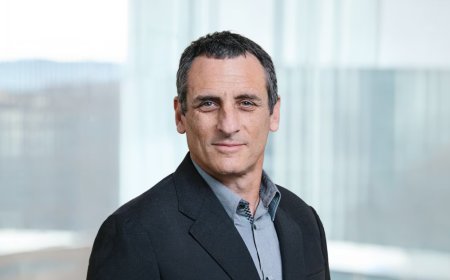
“Tools don’t create cyber resilience — strategy does,”
says Rohit Aradhya, VP & Managing Director, App Security Engineering, Barracuda Networks.
“When AI becomes integral to detection and response, it becomes a force multiplier against sophisticated ransomware. But the strongest defence will always be a security-aware culture, driven by learning, agility, adaptability, and purpose-oriented talent.”