


New connector enables organizations to integrate AI assistants with Security Center for streamlined deployment, configuration and operational workflows, with administrator-controlled permissions.
Genetec has introduced the Security Center MCP (Model Context Protocol) connector, enabling enterprise organizations to connect their preferred AI assistants with Genetec Security Center and streamline physical security management.
Built on the Genetec unified platform, the connector is designed to support a range of physical security activities, including system deployment, device and door configuration, maintenance and day-to-day operations.
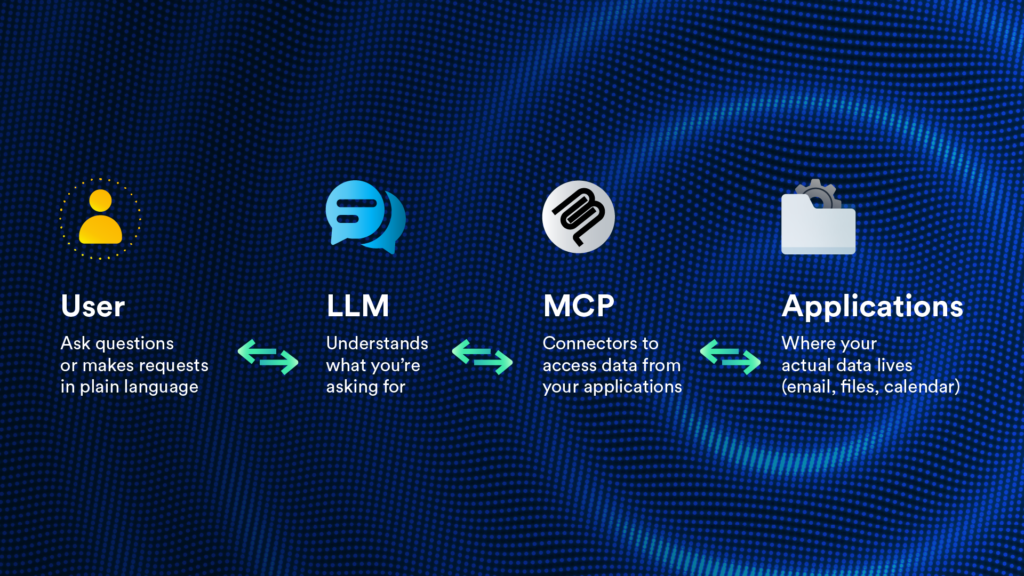
The Security Center MCP connector provides a consistent integration mechanism for AI assistants such as Microsoft Copilot, Anthropic’s Claude and OpenAI’s ChatGPT. Administrators can control the permissions and privileges available to connected AI assistants, including whether they can access information only or perform specific actions.
The approach is designed to reduce the need for separate integrations while allowing organizations to introduce AI-assisted workflows gradually within their existing security infrastructure.
“New technologies create the most value when they strengthen the systems customers already rely on,” said Francis Lachance, Senior Director, Product at Genetec Inc. “With the MCP connector, organizations can connect their preferred AI assistant to Security Center and incorporate it into their security workflows, building on the openness, flexibility, and control of the Genetec platform.”
AI-Assisted Deployment and Configuration
The initial release of the Security Center MCP connector focuses on deployment and configuration workflows, helping administrators and systems integrators reduce repetitive tasks and improve project efficiency in large-scale environments.
Through natural-language prompts, users can ask AI assistants to apply configuration templates across hundreds of devices, validate site configurations before commissioning, check device connectivity and health, identify devices requiring attention and standardise deployments across multiple locations.
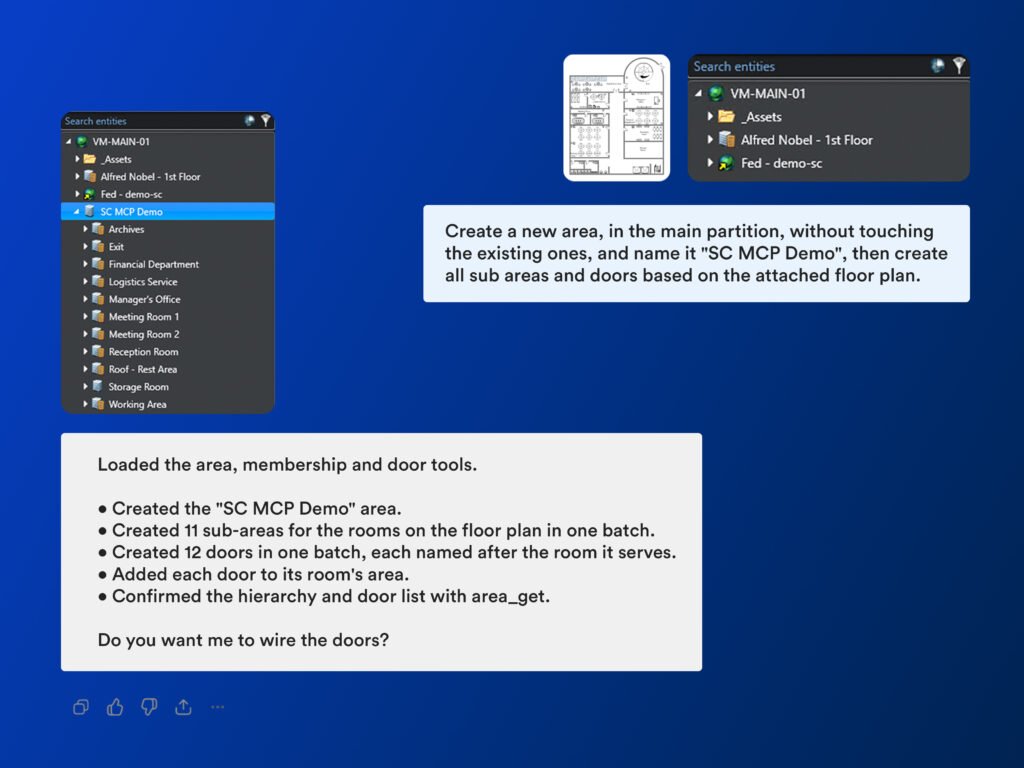
For example, administrators can provide an AI assistant with a floor plan and request the creation of a new area, including its associated sub-areas and doors, without modifying existing configurations. Tasks that would otherwise require hours of manual configuration across individual elements can be completed in minutes through a single natural-language request.
The capability is intended to reduce manual effort while helping maintain consistency across large security deployments.
Security Controls and Human Oversight
Genetec has designed the MCP connector around predefined, outcome-based skills rather than unrestricted access to Security Center SDKs or underlying systems. The connector provides a focused set of tools for specific security workflows, with the aim of improving reliability, predictability and risk management.
AI assistants can help users gather information, identify issues and prepare configuration changes. However, users remain responsible for approving consequential actions before they are executed.
The connector also does not provide direct access to underlying database operations that would allow AI agents to independently create, modify or delete system data.
Supporting AI-Assisted Physical Security Operations
Security Center brings together video surveillance, access control, intrusion detection, intercom, IoT sensor data and other operational information within a unified platform.
The MCP connector builds on this unified architecture, providing organizations with a foundation to introduce additional AI-assisted workflows as their physical security and operational requirements evolve.
The Security Center MCP connector is available globally to Genetec customers at no additional cost.
For more information, visit the Genetec Security Center MCP Connector announcement.